Caravan vs Camper Trailer: Which One Fits Your Adventure?
- Adventure Guide
- 9 min read
- 17 sections
A caravan and a camper trailer can both open up more weekends away, longer family holidays and extended travel around Australia.
The better fit comes down to how much comfort you want, how quickly you like to set up, where you plan to travel, how much equipment you carry and what your 4x4 can comfortably and legally support.
The category label is only the starting point. The real decision is about the way you want to live once you arrive at camp.
Quick Takeaway
Caravans generally put more of the living space, storage and everyday facilities inside a permanently enclosed setup.
Camper trailers generally pack into a more compact towing footprint and expand at camp, keeping more of the experience connected to outdoor living.
Neither is automatically better. The right choice depends on setup time, comfort, storage, bathroom needs, off-grid plans, towing, family layout and how often you move.
The Simple Difference
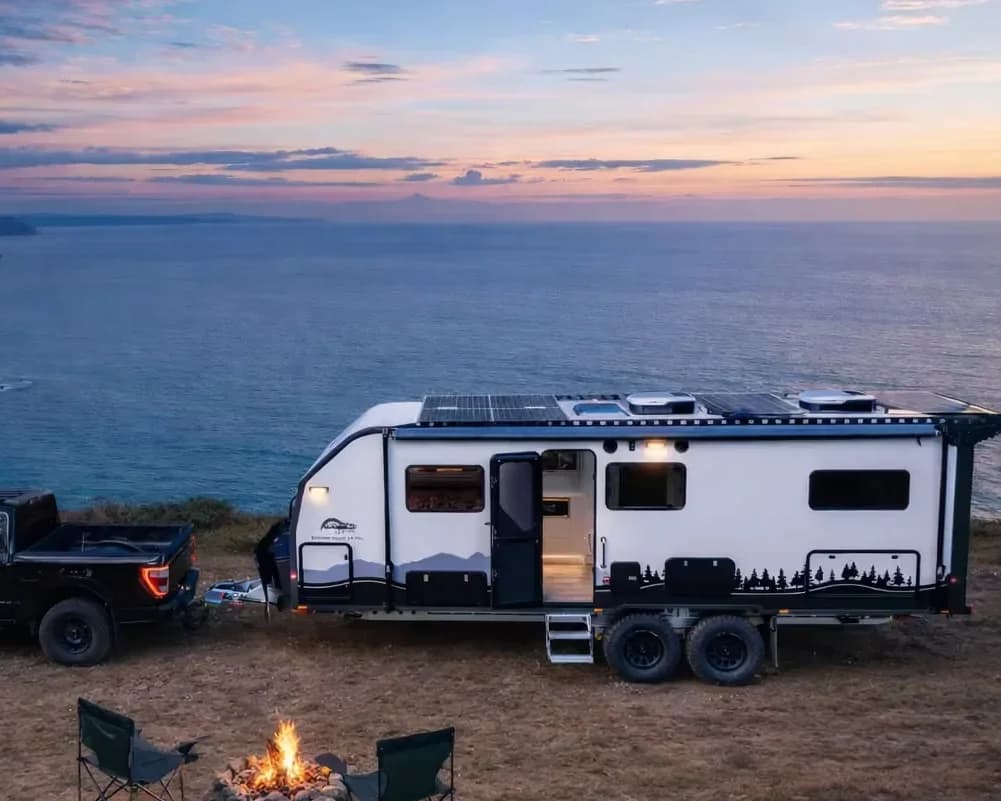
Caravan
A caravan usually gives you more of the living space, storage and everyday facilities permanently built into the van.
For many travellers, the appeal is arriving at camp with much of the accommodation already enclosed and ready to use.
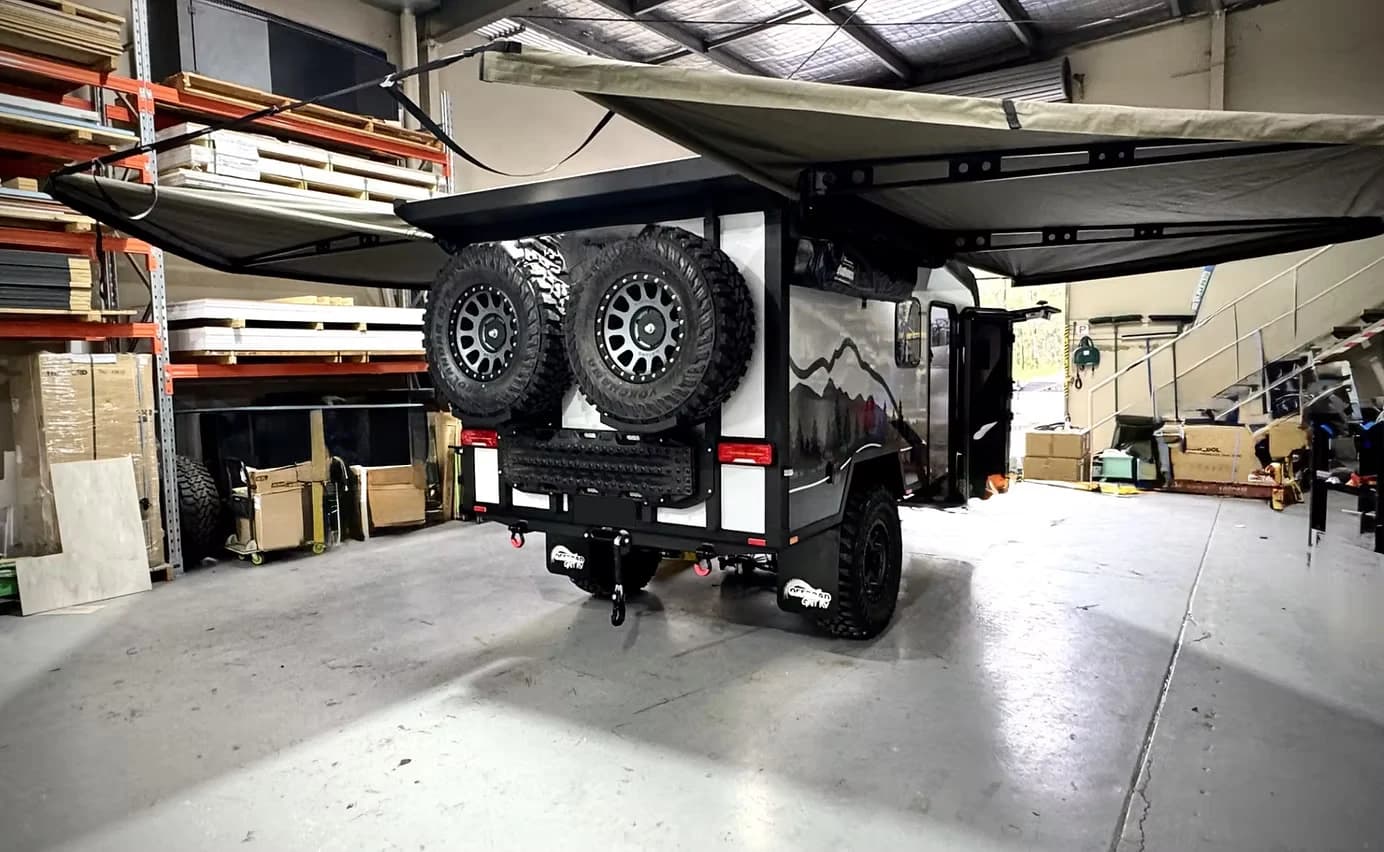
Camper Trailer
A camper trailer generally packs into a smaller towing footprint and expands at camp.
It can provide a more camping-oriented experience while still adding shelter, storage, cooking and other comforts beyond basic tent camping.
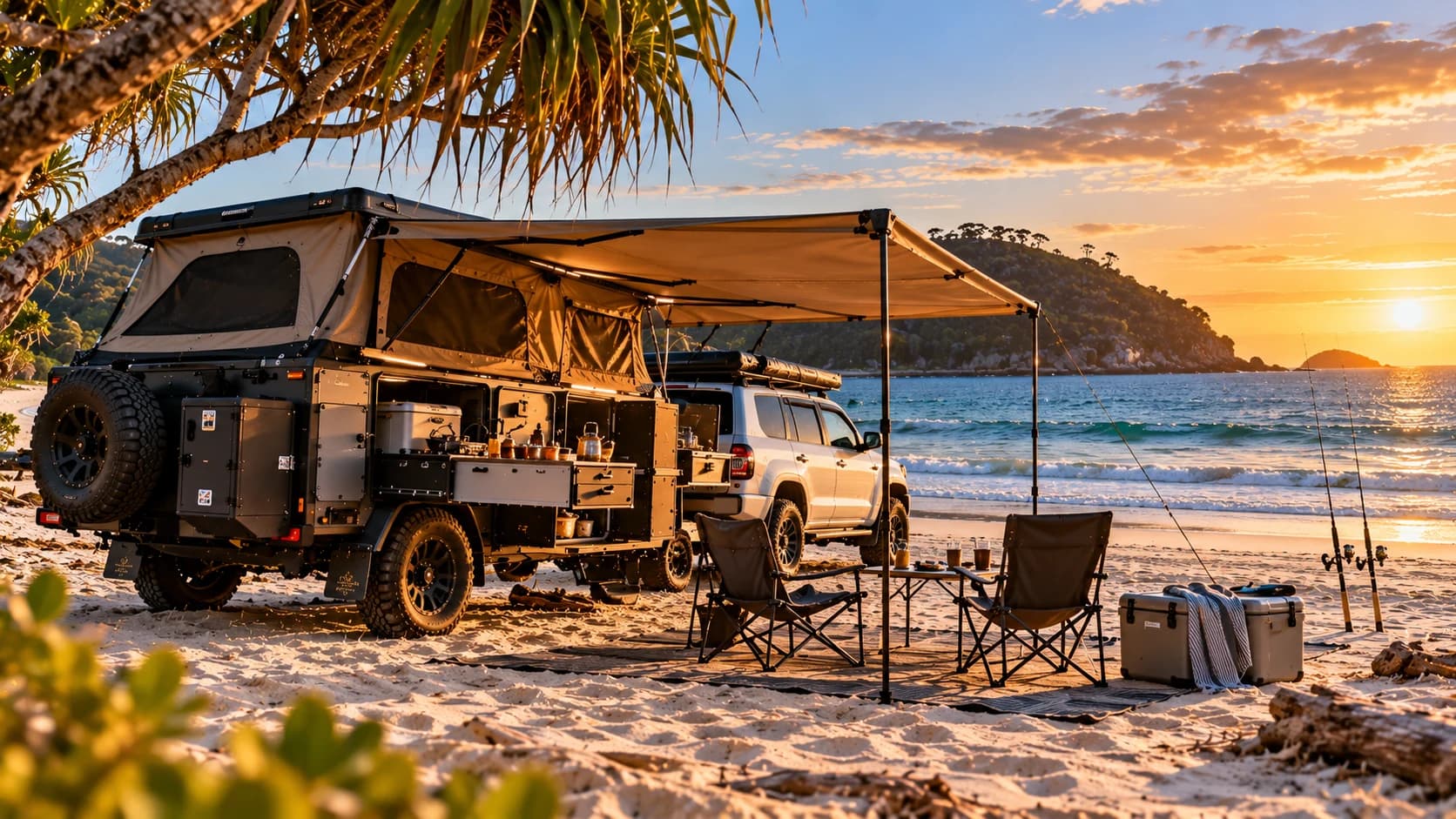
There are many designs within both categories, including touring, off-road, hybrid and family-focused layouts, so the label alone does not tell the full story.
Start With the Way You Want to Travel
Local Weekend Adventurer
A camper trailer can suit people who want a compact setup for quick escapes and still enjoy being close to the camping experience.
A smaller caravan can also work well where easy setup and enclosed comfort matter more.
Family Getaway Explorer
Families often place more weight on sleeping arrangements, storage, food preparation, refrigeration, water, weather protection and how easily everyone can settle into camp.
Long-Term Traveller
For extended travel, day-to-day liveability becomes more important.
Storage, bathroom facilities, kitchen layout, power, water, ventilation, workspace and the ease of setting up repeatedly can all influence the decision.
Setup and Pack-Down
Caravan
A caravan can reduce the amount of accommodation setup required at each stop because the main living structure is already in place.
Levelling, stabilising, connecting services and setting up outdoor areas can still form part of camp setup, but the internal living space is generally ready sooner.
Camper Trailer
A camper trailer may require more unfolding, canvas work, poles, bedding or external kitchen setup depending on the design.
For travellers who enjoy the camping process or stay longer at each destination, that extra setup may be a comfortable trade-off for a more compact towing package.
Comfort and Weather Protection
Comfort means different things to different travellers.
Caravan Strengths
- fully enclosed sleeping and living areas
- greater separation from wind, rain and dust
- more permanent cabinetry and storage
- potential for internal bathroom and kitchen layouts
- less reliance on external living space in poor weather
Camper Trailer Strengths
- strong connection to the outdoor camping experience
- large opened-up living spaces in some layouts
- good airflow in suitable weather
- compact packed size relative to the space created at camp
- flexible use of external awnings and annexes
The right balance depends on whether you see the accommodation as a base for outdoor living or want more of the living environment contained inside.
Storage
Storage needs tend to grow with the number of travellers and the length of the trip.
Caravan
Caravans can provide more built-in cupboards, under-bed storage, kitchen storage and dedicated spaces for everyday items.
Camper Trailer
Camper trailers can be highly efficient, but storage often needs more deliberate organisation because some space is also used by folding or expanding sections.
For either option, think about where food, clothing, recovery gear, chairs, tables, hoses, cables, tools and wet equipment will live.
Kitchen and Refrigeration
Food preparation can be one of the biggest lifestyle differences.
Caravan
A caravan may offer a more permanent internal kitchen, larger refrigeration options and easier access during poor weather or short stops.
Camper Trailer
A camper trailer may use an external or slide-out kitchen, which can suit travellers who prefer to cook outdoors and keep cooking smells and heat outside the sleeping area.
Think about whether the kitchen is comfortable to use in rain, wind, heat and darkness, not only how it looks on a showroom floor.
Bathroom and Washing Facilities
For some travellers, an internal shower and toilet are major reasons to choose a caravan.
For others, campground facilities or an external shower setup are enough.
A camper trailer may provide external shower arrangements or selected built-in facilities depending on the design.
For the Family Getaway Explorer and Long-Term Traveller, privacy, water use, tank capacity and the frequency of free camping can all influence how important an internal bathroom becomes.
Power and Off-Grid Capability
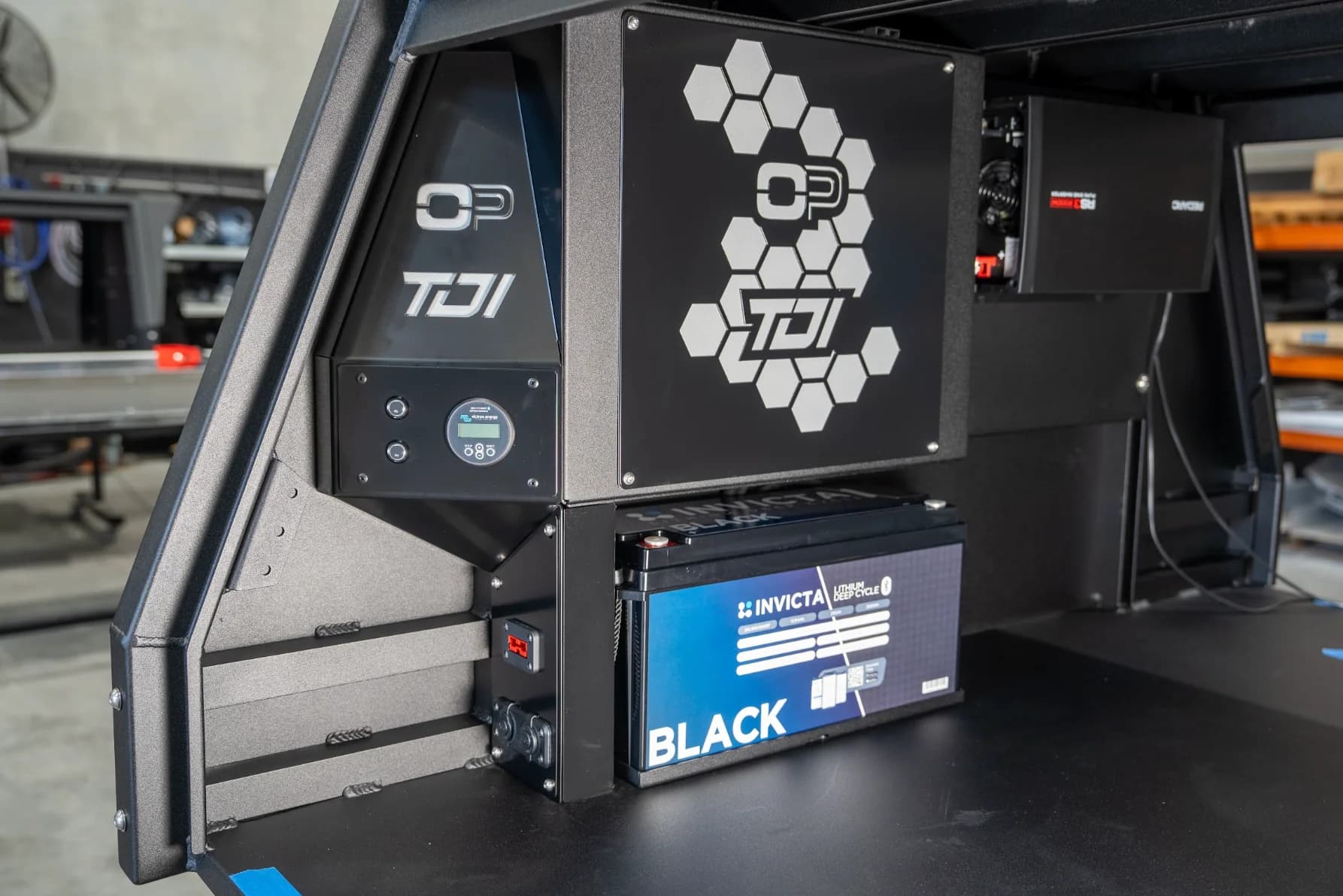
Both caravans and camper trailers can support substantial off-grid systems.
The setup may include:
- battery storage
- solar
- charging equipment
- inverter where relevant
- refrigeration
- lighting
- water pumps
- device charging
- communications equipment
The right system depends on what needs to run and how long you expect to remain away from external power.
 Related GuideLithium Battery Setup for Touring
Water and Longer Stays
Water capacity can affect how long the setup remains comfortable away from serviced campgrounds.
A larger caravan may offer more room for fresh-water storage and integrated plumbing, while a camper trailer may use a simpler system that keeps the overall setup more compact.
Every litre of water also adds weight, so capacity belongs in the towing and payload conversation rather than being treated as free storage.
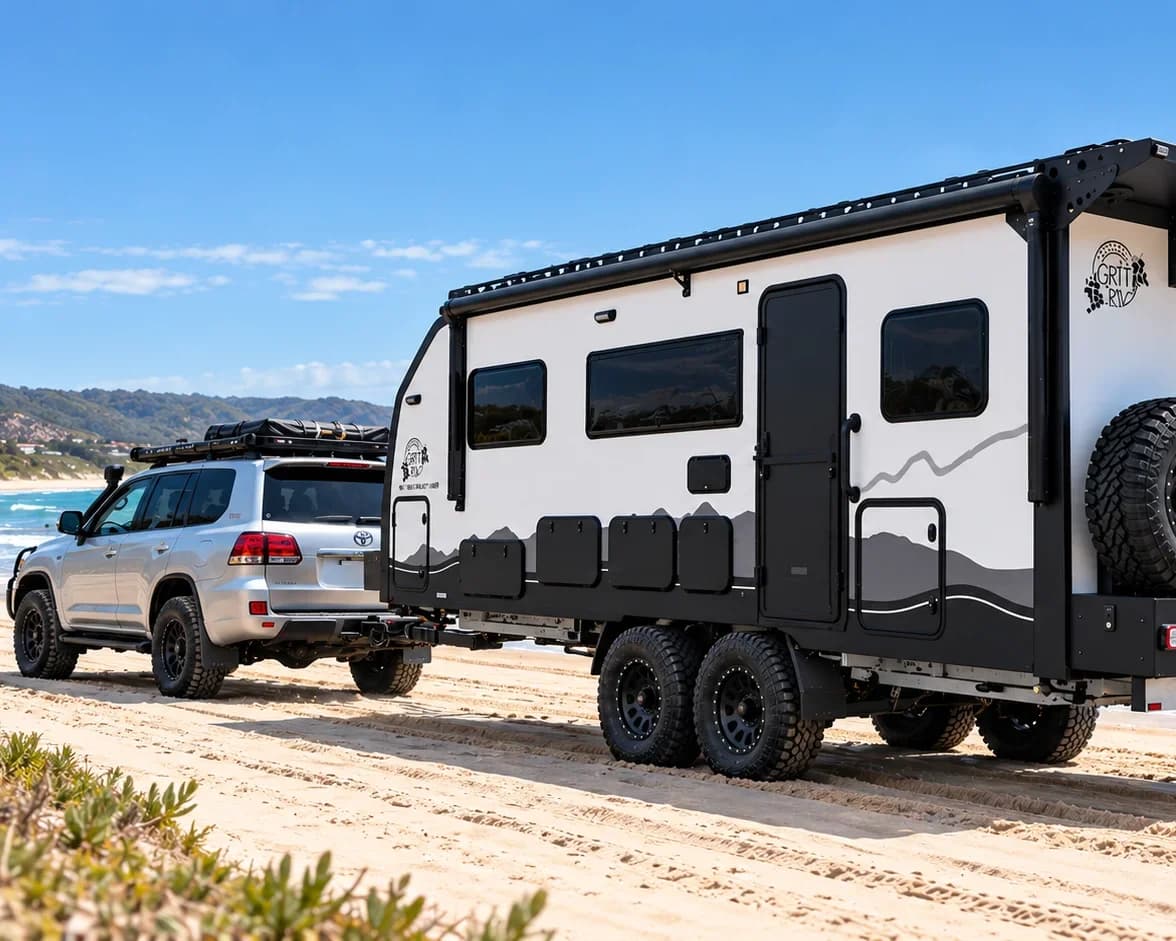
Towing and 4x4 Fit
The caravan or camper is only one half of the towing setup.
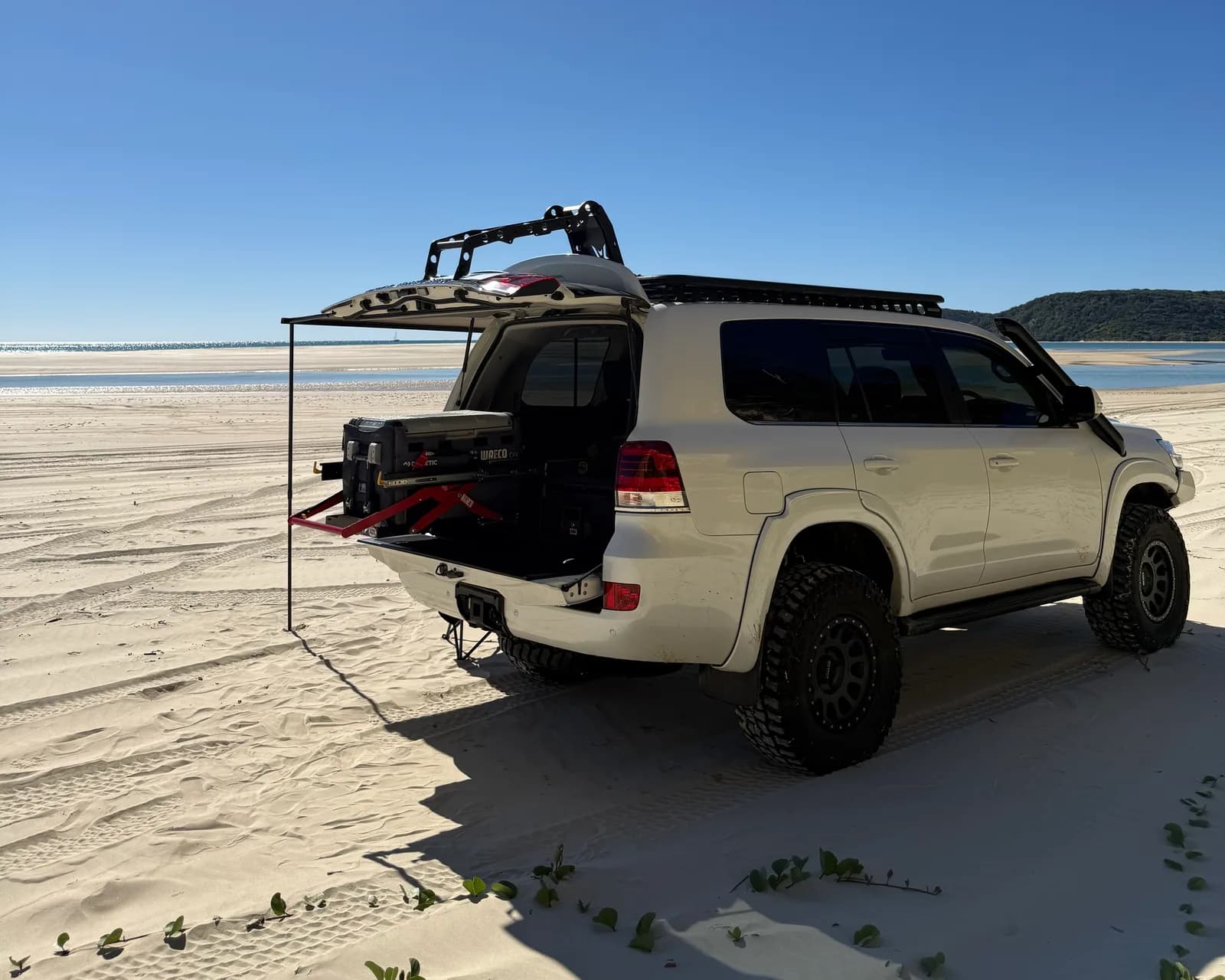
The 4x4, passengers, luggage, accessories and tow-ball load all matter.
A heavier or larger caravan can place different demands on the 4x4 than a lighter camper trailer, but actual suitability depends on the specific 4x4 and trailer rather than category labels.
Relevant considerations can include GVM, GCM, axle loads, towing limits, trailer ratings and tow-ball load.
 Related GuideGVM vs GCM
 Related GuideGVM Upgrades
Access and Where You Want to Camp
Think about the destinations you genuinely want to reach.
A compact camper trailer may suit travellers who prioritise a smaller towing footprint and camps that feel closer to traditional camping.
A caravan may suit travellers who prioritise self-contained comfort and spend more time on established touring routes.
Off-road capability varies widely within both categories.
The product's actual design, construction, clearance, suspension, tyres and intended use matter more than the marketing label alone.
Daily Travel vs Longer Stays
Moving Often
If you change camp frequently, setup and pack-down effort can become a major part of the experience.
A setup that is easy to arrive in, use and leave can have real value.
Staying Longer
If you tend to stay several days or weeks in one place, a longer setup process may matter less, particularly if the camper creates a large and comfortable living area once opened.
Family Layout
For family travel, think beyond the number of advertised sleeping positions.
Consider:
- where children sleep
- whether beds need to be packed away each day
- privacy
- clothing and school-holiday gear storage
- wet-weather living space
- fridge and food access
- night-time toilet access
- charging points
- how quickly the family can set up after a long driving day
A layout that works for two adults can feel very different once children and all their gear are added.
Long-Term Touring Layout
For months on the road, small inconveniences can become daily frustrations.
Long-term travellers can benefit from considering:
- bed access without daily conversion
- usable kitchen bench space
- refrigeration access
- bathroom practicality
- clothing and pantry storage
- ventilation
- power and charging
- water management
- workspace where relevant
- external storage for hoses, tools and dirty equipment
The best long-term setup is one that is easy to live with on ordinary days, not only impressive during the first inspection.
Side-by-Side Comparison
| Consideration | Caravan | Camper Trailer |
|---|---|---|
| Setup | Generally more of the living space is ready on arrival. | Often involves unfolding or additional camp setup. |
| Enclosed comfort | Usually stronger emphasis on internal living. | Usually stronger connection to outdoor living. |
| Storage | Often more built-in internal storage. | Can be efficient but may require tighter organisation. |
| Kitchen | Often internal or more permanently integrated. | Often external or slide-out. |
| Bathroom | More likely to include fully internal facilities. | Varies widely by design. |
| Packed footprint | Can be larger depending on design. | Often more compact when packed. |
| Camp feel | More self-contained. | Closer to traditional camping. |
| Long stays | Strong day-to-day liveability. | Can provide generous camp space once set up. |
| 4x4 demand | Depends on actual caravan mass and load. | Depends on actual trailer mass and load. |
14 Questions to Ask Before Choosing
How many people will regularly travel?
How often will we move camp?
How much setup and pack-down do we enjoy?
How important is an internal bathroom?
Do we prefer to cook inside or outside?
How much storage do we genuinely need?
How much time will we spend off-grid?
What power and water systems do we need?
Where do we want to travel?
How much enclosed living space matters in poor weather?
What does our 4x4 need to carry as well as tow?
What are the relevant 4x4 and trailer weight limits?
Will the setup work for our family in several years, not only today?
Do we want a compact camping setup or a more self-contained travelling home?
Real-World Decision: Think About the Ordinary Days
The right setup is not only the one that feels exciting on the dealer floor or at a camping show.
Think about the ordinary parts of travel:
- arriving late after a long drive
- packing up in the rain
- feeding the family when everyone is tired
- finding dry storage for wet gear
- getting to the toilet at night
- keeping devices charged
- moving camp again the next morning
- living in the setup for several days when the weather is poor
The setup that handles ordinary days well is often the one that makes the bigger adventure easier to enjoy.
Key Takeaways
- Choose around the way you want to travel, not only the category label.
- Caravans generally place more emphasis on enclosed, ready-to-use living space.
- Camper trailers generally place more emphasis on compact towing and outdoor camp living.
- Setup time matters more when you move frequently.
- Storage, kitchen, bathroom, power and water become increasingly important for family and long-term travel.
- The 4x4 and trailer need to be planned together.
- Use actual 4x4 and trailer specifications for towing and weight decisions.
- Think about the ordinary travel days, not only the perfect campsite.
Common Questions
Is a caravan or camper trailer better for families?
It depends on the family, travel style and preferred level of comfort. Storage, sleeping arrangements, bathroom access, setup time and wet-weather living space can all influence the choice.
Is a camper trailer easier to tow than a caravan?
Not automatically. Towing suitability depends on the actual trailer, loaded mass, dimensions, 4x4 and applicable limits rather than the category name alone.
Is a caravan easier to set up?
Often, because more of the living space remains permanently assembled. The amount of setup still varies between caravan designs and the way the campsite is used.
Can camper trailers have lithium and solar?
Yes. Camper trailers can support substantial electrical systems depending on their design and the way the traveller uses them.
Do I need an internal bathroom?
That depends on where you camp, how long you stay away, personal preferences and the facilities available at the destinations you use.
What matters more: towing capacity or GVM?
Both can matter, along with GCM, axle loads, trailer ratings and tow-ball load. The complete 4x4-and-trailer combination needs to be considered.
Finance Your Adventure
If the caravan or camper plan has moved from research into a real purchase decision, Adventure Finance is the separate specialist finance pathway. Built for Adventure keeps this Guide focused on choosing and planning the setup. Questions about pre-approval, lender criteria, rates, terms or financing the caravan, camper or 4x4 belong with Adventure Finance.